
Practical class 9 - Nematode parasites
Learning outcomes
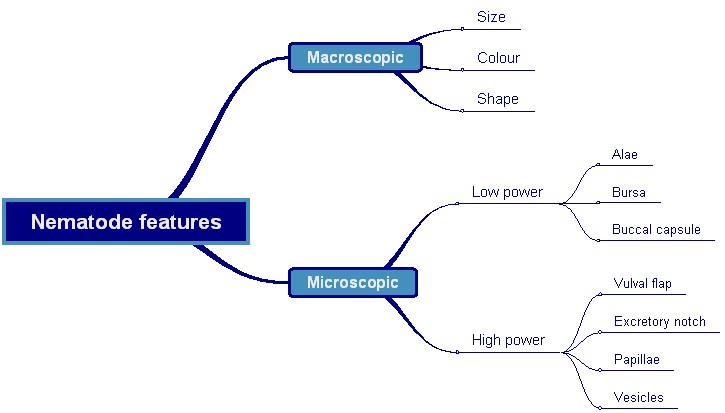
These web pages give you access to images of some of the nematodes that you looked at during this practical class. After this class you should be able to identify all the nematodes that you were shown by name to the genus level and explain (to the examiner!) the criteria you used eg host, size, special morphological features such as bursa, buccal capsule, alae etc
The aim of this practical is present examples of the nematodes which show a range of morphological features as well as placing them the context of the host species that they are found in. Therefore, it is important to remember that parasites included in this practical are only examples of the nematodes infecting the different host types and not intended to be an exhaustive list of all parasites that could be found in these hosts.
The information on these web pages is arranged according to host species because in your working life you are most likely to find these nematodes during a post mortem. However, adult worms can be expelled in the faeces after drug treatment or as a result of of host immunity, so you need to be able to deal with an animal owner turning up with or showing you worms that have been passed in the faeces.
Accordingly we have grouped the nematodes featured in this practical according to the host, as this would be your starting points for any identification (and in the spot exam!).
- Morphological features used to identify nematodes (Image file)
- Posters
- Ascarids (PDF)
- Haemonchus (PDF)
- Strongylus vulgarais (PDF)
- Cuticular ornamentation (PDF)
- Nematodes by host type
- Ruminants
- Cooperia
- Haemonchus
- Trichuris
- Chabertia
- Nematodirus
- Horses
- Dogs and cats
- Pigs
- Ruminants
Trichinella spiralis – as encysted larvae in a stained section of host (Polar Bear) muscle