Introduction
These techniques are an alternative to intra-oral techniques. They
are most often indicated for large lesions or when intra-oral techniques
are not possible.
|
Left-Right Lateral or Right-Left Lateral
|
|
The patient is in lateral recumbency and the rostral aspect of
the head is raised, to create a parallel relationship with the film.
This technique is often used for routine surveys, but the diagnostic
ability of this technique is limited by superimposition of structures.
The open mouth view prevents overlay of the coronoid processes of
the mandibles.
|
|
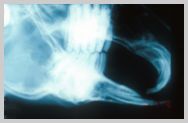
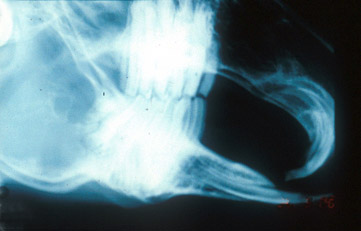
Rabbit right-left lateral with slight
tipping. Note superimposition
|
Ventro-dorsal Skull
|
|
|
|
The patient is in dorsal recumbency, with the hard palate parallel
to the film. If possible, the endotracheal tube should be removed
before exposure.
The diagnostic ability of this technique is limited by superimposition
of structures. An intra-oral technique can also be performed with
less superimposition.
|
|
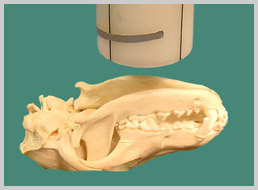
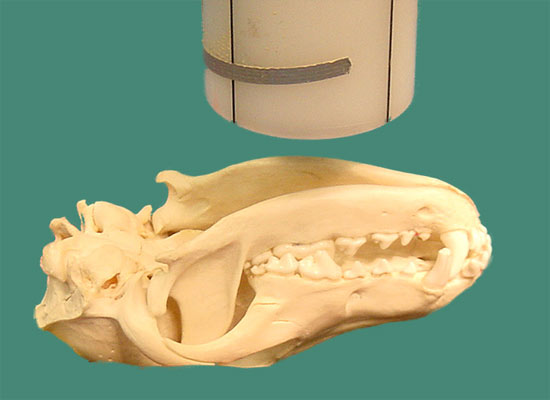
Positioning for Ventro-dorsal skull
|
|
|
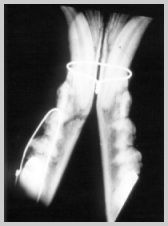
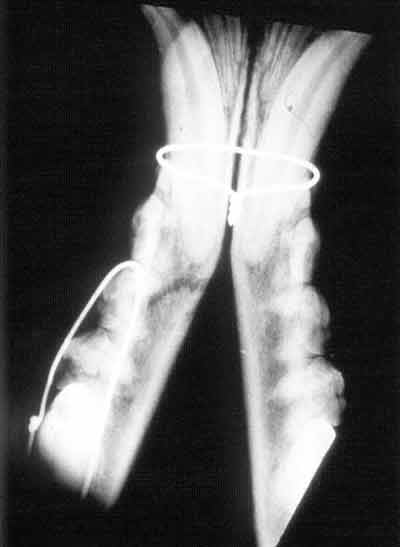
Intra-oral radiograph ventrodorsal mandible
- note lack of superimposition of maxillary structures
|
Dorso-ventral Skull
|
|
|
|
This technique is similar to the ventro-dorsal technique, but with
the patient in sternal recumbency. An intra-oral technique can also
be performed with less superimposition.
|
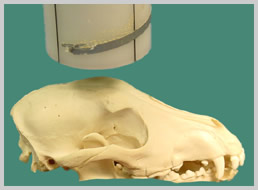
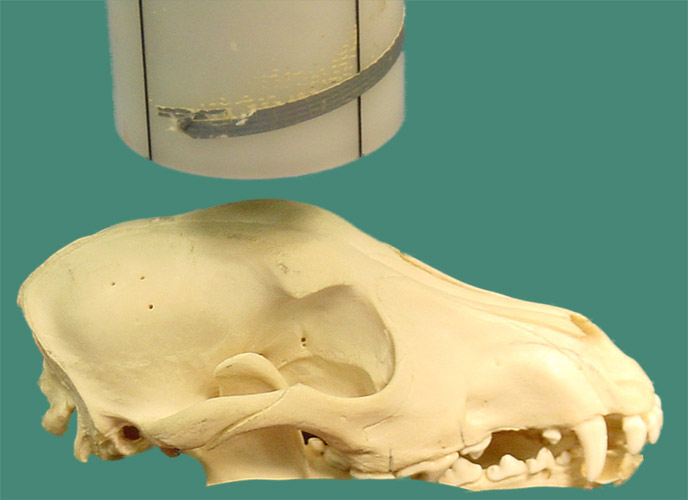
Positioning for DV skull extra-oral
technique
|
|