The Mucosal Immunology GroupThe Mucosal Immunology Group (formerly the "Miller Group" led by Hugh Miller until he retired in Sept 06) has a strong track record in studying mucosal immunity in nematode parasitism and allergic inflammation in general. Such allergic reactions are typified by mast cell and eosinophil recruitment, increased numbers of goblet cells and enhanced and altered mucus release. Our previous work has focussed on mast cells, their recruitment to the epithelium and how mucosal mast cell specific proteases function within the affected mucosa. A key role for the proteases may be in regulating epithelial tight junctions, thus controlling epithelial permeability. More recently our work has focussed on the identification and characterisation of novel effector molecules produced by the gastrointestinal mucosa and draining lymph nodes in response to nematode parasitism in both rodents and sheep. These include components of mucus produced by goblet cells such as the intelectin family and sialyl transferase 4C, immunoregulatory molecules such as the chitinase-like family and cytokines, and pro-inflammatory mediators such as the phospholipase family. Some of these molecules are also produced by the airway mucosa eg. during human athsma. We employ current methods for global analysis of gene transcription (micro-arrays) and protein expression (proteomics) to discover novel molecules and patterns of expression in allergic reactions and parasite rejection. Candidate molecules are studies in more detail using qRT-PCR (quantitative reverse-transcription PCR), biochemical and immunohistochemistry techniques, and in some cases, direct functional genomics studies in rodents. In particular, determining the role of these molecules in host responses to gastrointestinal parasitism of sheep is a major goal. By understanding how natural immunity to parasites works, we will be in a better position to augment these processes and design effective vaccines. |
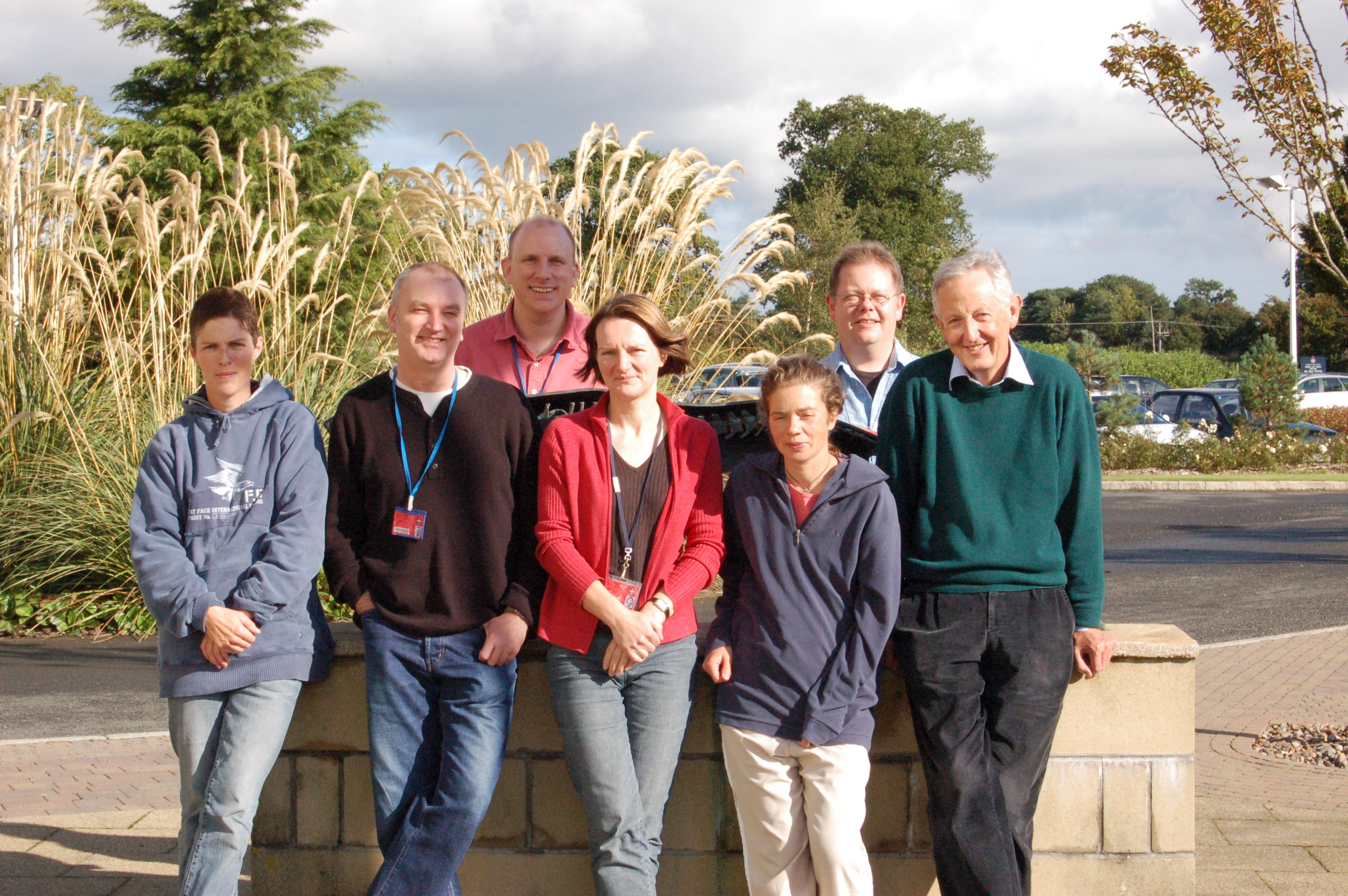 Core members of Mucosal Immunology Group
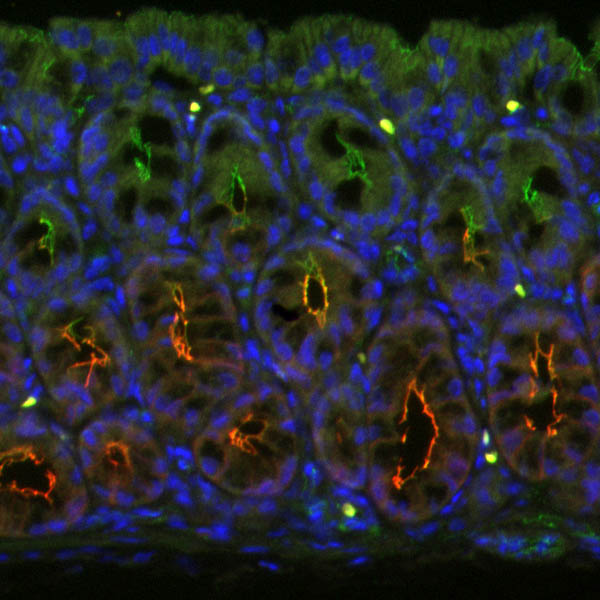
Murine colon stained with Claudin-2 (red) and ZO-1(green) to show tight juntions
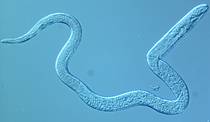
Trichinella spiralis adult worm
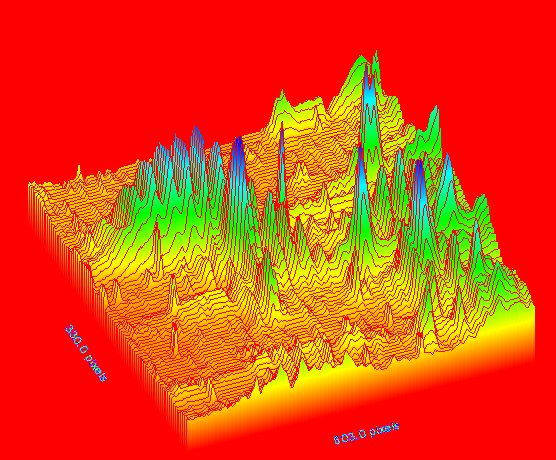
Proteomic analysis of the abomasal mucosa from a T. circumcincta infected sheep
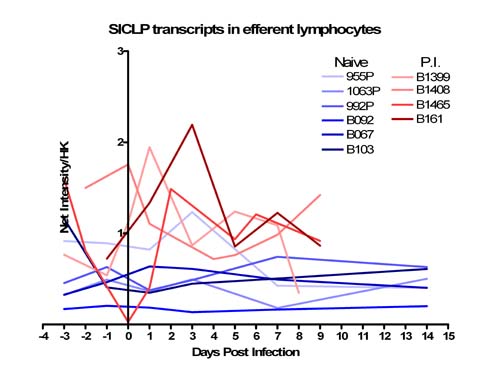
Transcript levels in efferent lymphocytes from individual sheep following T. circumcincta challenge |
|
Contacts Pam Knight pam.knight@ed.ac.uk Alan Pemberton alan.pemberton@ed.ac.uk
PublicationsView the Mucosal Immunology Group Publications. |