




Graph showing the relationship between the incidence of activity in rubber-ring castrated lambs and the size of the wound caused by the ring breaking down tissue at the neck of the scrotum.
Kent et al 1999
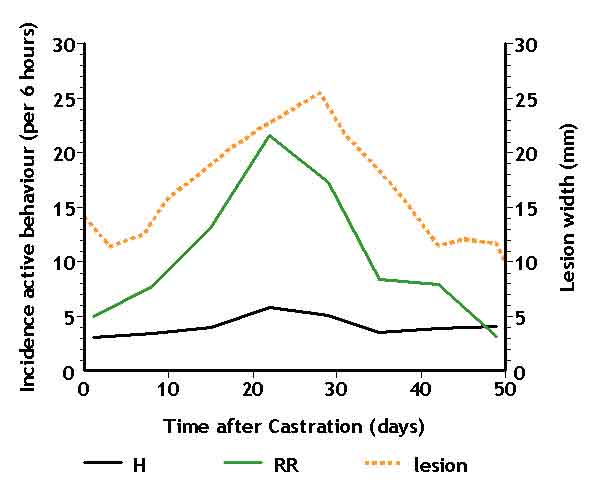
Frequency of foot stamping, kicking, tail wagging, easing and itching quarters
H - Handled lambs.
RR - Rubber ring castrated lambs.
Lesion - lateral width of the lesion at the neck of the scrotum formed by the break down of tissue by the ring.
Note the gradual increase in the incidence of foot stamping, kicking, easing and itching quarters and tail wagging in the 21 days after rubber ring castration of these six week old lambs. Baseline activity was 5 instances of the above behaviour in a six hour period. In castrated lambs, a peak of 23 occurred on day 21 after treatment. A similar increase was not shown by non-castrated control lambs kept in the same housed conditions (Mean value remaining between three and five instances of the above behaviour in a six hour period).
The width of the ring and tissue under the ring, before the tissue started to break down was 12 to 15 millimetres (mm). The tissue started to break down about 7 to 10 days after treatment and the width of the wound formed increased to a mean peak of 26mm 28 days after treatment. After the dried up scrotum and ring had dropped off, healing could then occur. Complete healing had not happened in all lambs by 50 days after treatment. As the wound healed the incidence of foot stamping etc decreased.
